
The Number You See Is Not the Only Number That Matters
You’ve found the hot tub you want. The price tag looks manageable. The salesperson seems honest. But then someone in your life asks the question that gives you pause: “What does it actually cost to own one of those?”
It’s a fair question, and it deserves a fair answer. Hot tub ownership involves more than the purchase price. There are installation costs, monthly energy costs, water chemistry, routine maintenance, and eventually, parts or service. Ignoring those numbers doesn’t make them go away — it just makes the first utility bill after installation a surprise.
The good news is that the total cost of ownership for a well-built, well-maintained hot tub is genuinely reasonable. And when you look at what it replaces — spa memberships, massage therapy sessions, gym access, sleep aids , the math often works out in the hot tub’s favor. Here’s how to think through the full picture.

Purchase Price: What You’re Actually Paying For
Hot tub prices vary widely, and understanding why helps you avoid paying either too much or too little. Entry-level models from lesser-known manufacturers often start under $5,000, but they typically compromise on insulation quality, jet engineering, shell durability, and component longevity. A hot tub that fails within three years isn’t a bargain.
Quality mid-range hot tubs from Jacuzzi® and Nordic Hot Tubs™ — the brands Van Dorn carries — run from roughly $6,500 to $15,000+ depending on the model, size, and feature set. What you’re paying for in this range includes:
- Full-foam or advanced insulation systems that dramatically reduce heating costs
- Durable acrylic shells with manufacturer warranties spanning 5+ years
- Engineered jet systems built for therapeutic performance, not just appearance
- Energy-efficient pumps and filtration designed for long operational life
- Cabinet materials that resist rot, UV, and the freeze-thaw cycles common in Maryland winters
The J-400™ and J-LX® Collections from Jacuzzi® represent the upper tier of this range, with jet configurations, lighting, audio, and connectivity features that justify the premium. Nordic tubs sit in a value-to-performance sweet spot — fewer bells and whistles, exceptional build quality, lower price point.
A high-quality hot tub, properly maintained, has an average lifespan of 15-20 years. Spread the purchase price over that timeline and the annual cost of ownership from the purchase alone looks very different.
Installation: Site Prep, Electrical, and Delivery
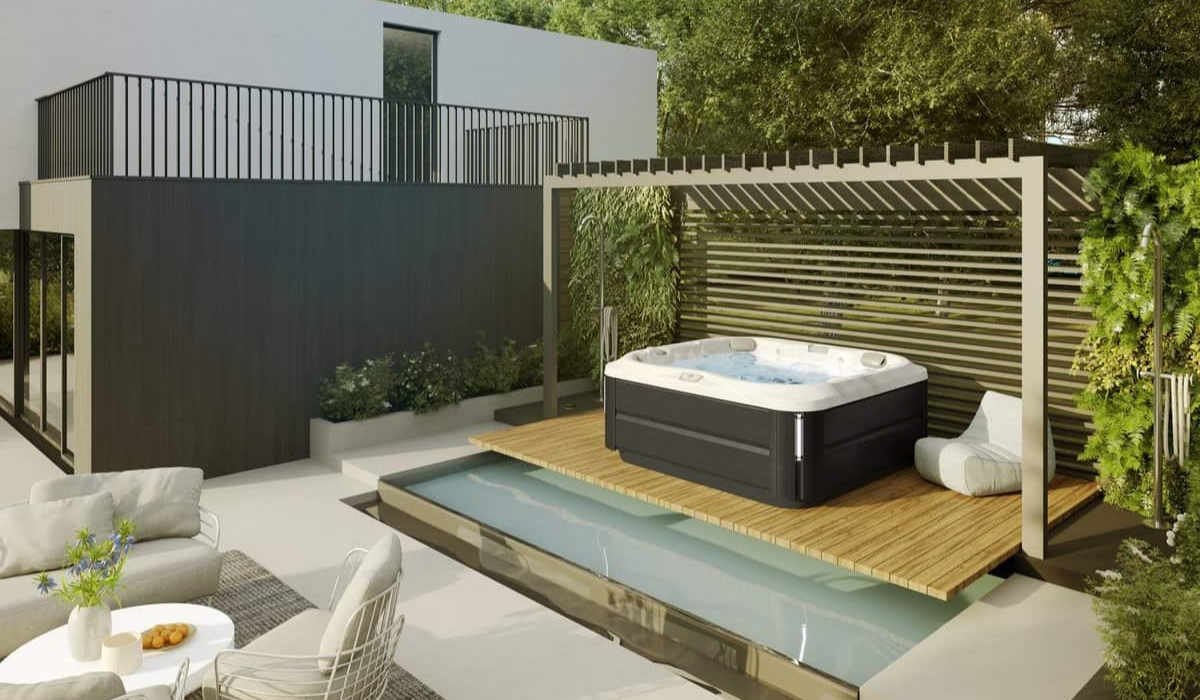
The hot tub doesn’t just appear in your backyard. Installation involves several components that vary depending on your site and existing infrastructure.
Concrete pad or reinforced deck: A filled hot tub weighs between 3,000 and 6,000 pounds depending on size. It needs a level, load-bearing surface. If you have an existing reinforced concrete pad or code-compliant deck, you may need only minor preparation. If you need to pour a new pad, budget roughly $500 to $1,500 depending on size and local contractor rates in Maryland.
Electrical: Most hot tubs require a dedicated 240V, 50-amp circuit with a GFCI breaker, installed by a licensed electrician. This typically runs $500 to $1,500 depending on how far your electrical panel is from the installation site and local permit requirements.
Delivery and placement: Van Dorn coordinates delivery and uses equipment to place the tub precisely. If access is straightforward — a wide gate and clear path — delivery costs are minimal. Tight access situations may require additional equipment or planning.
All in, first-time installation costs typically add $1,000 to $3,000 to the base purchase price for most Maryland homeowners. This is a one-time cost that amortizes over the life of the tub.
Monthly Energy Costs: The Real Number
Energy costs are the area where hot tub shoppers are most often misled — either by inflated scare figures or by optimistic estimates that don’t reflect real-world conditions. Maryland’s electricity rate, the quality of your tub’s insulation, and your usage patterns all factor in.
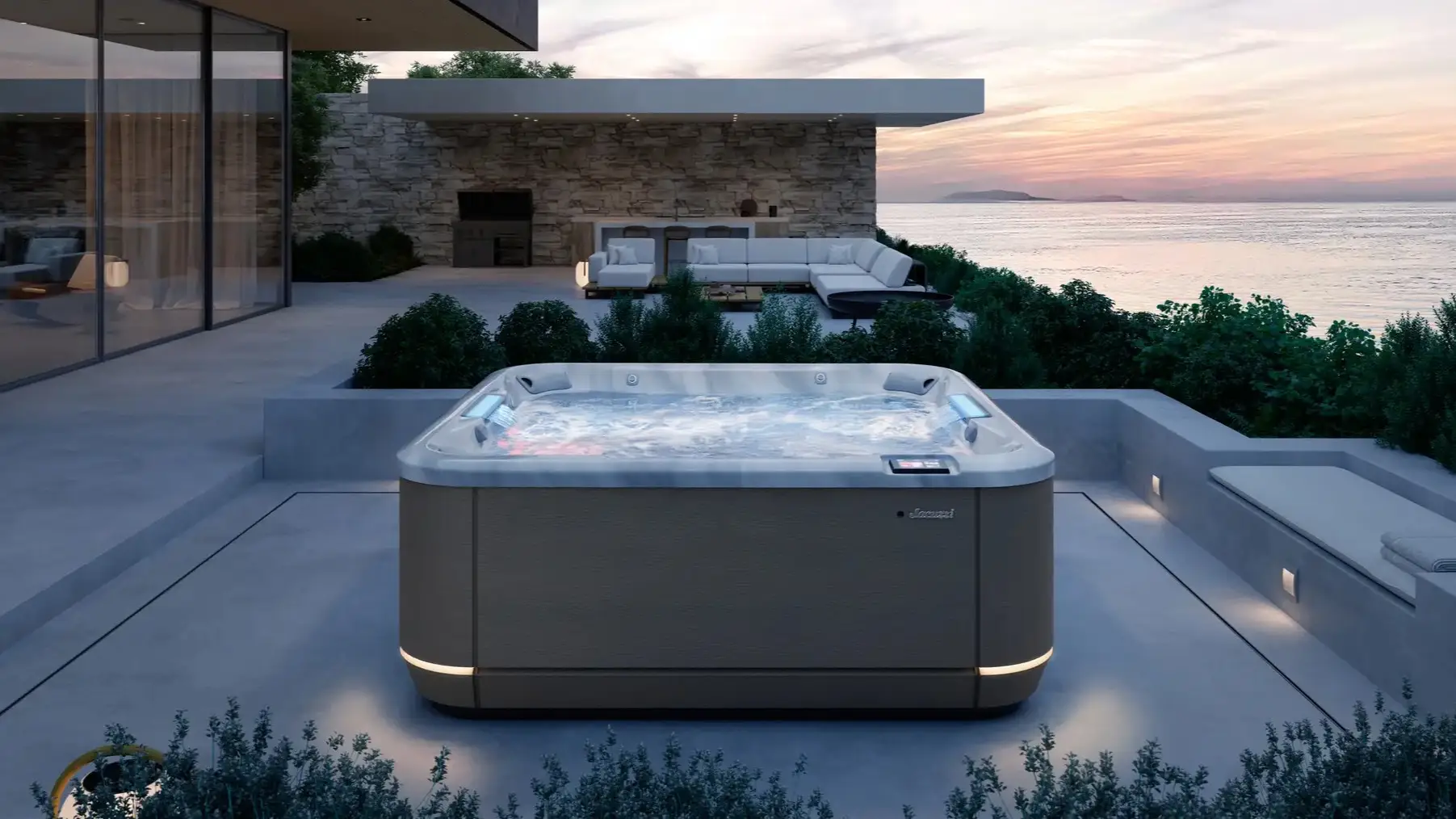
For a well-insulated hot tub like a Jacuzzi® or Nordic model, monthly energy costs typically range from $20 to $50 per month in moderate climates. In Maryland winters, this figure can rise to $50 to $80 during extended cold spells if the tub is heavily used and the cover doesn’t seal well.
The insulation system is the single biggest variable. Full-foam insulation fills the entire cabinet cavity, eliminating air gaps where heat escapes. A tub with a partially insulated or base-only insulation design can cost two to three times more to operate than a full-foam equivalent at the same temperature setting.
Cover quality matters just as much. A worn, waterlogged, or ill-fitting cover can account for 30-50% of a hot tub’s heat loss. Replacing a degraded cover is one of the highest-return maintenance investments you can make. Van Dorn carries covers and cover lifters, and the team can assess whether yours is performing correctly.
Other factors that reduce energy costs: using a timer to heat the tub overnight when electricity rates are lower, lowering the setpoint by 2-4 degrees if you know you won’t use it for several days, and keeping the tub full (underfilled water heats and loses heat less efficiently).
Water Chemistry: What It Costs to Keep the Water Safe
Water chemistry is the maintenance task hot tub owners underestimate most. Unlike a swimming pool with hundreds of gallons to buffer chemical shifts, a hot tub holds 300 to 500 gallons of water at elevated temperatures. That combination accelerates chemical consumption and requires more frequent attention.
The baseline supplies you’ll use regularly include chlorine or bromine sanitizer, pH up and pH down solutions, alkalinity increaser, and a monthly oxidizing shock treatment. Some owners also use mineral cartridges or ionizers like the Spa Frog® system Van Dorn carries, which reduce the amount of chemical sanitizer needed.
Budget roughly $20 to $40 per month for routine water chemistry supplies when you’re using the tub regularly. Inconsistent chemistry management leads to problems — cloudy water, biofilm, scale buildup, or corroded jet components — that cost far more to remediate than preventing them.
Water itself should be changed every three to four months in a regularly used tub. Draining, cleaning the shell, and refilling takes two to three hours and uses roughly 350-500 gallons of water. At Maryland water rates, this is a negligible cost.
Routine Maintenance and Service: Keeping It Running
A hot tub is a mechanical system. It has a pump, a heater, a control board, filters, and jets. Routine maintenance prevents the kind of failures that turn a manageable repair into a major replacement.
Filter cleaning and replacement: Filters should be rinsed every 2-4 weeks and chemically cleaned monthly. They typically need replacement every 12-18 months. A quality replacement filter costs $30 to $80.
Annual inspection: Van Dorn offers hot tub service and repair for all brands in their lineup. An annual check of jets, seals, electrical connections, and the cover condition catches small issues before they become large ones.
Equipment lifespan: Pumps on quality hot tubs typically last 8-15 years. Heaters run 5-10 years depending on water chemistry management — poor chemistry is the primary cause of premature heater failure. Control boards are durable with proper voltage protection but can be affected by power surges. A quality surge protector is a small investment worth making.
Plan for roughly $100 to $200 per year in routine consumables and occasional minor parts. Significant repairs, when they occur, run from $200 to $800 for common component replacements. Spread across 15-20 years of ownership, this is a predictable and manageable cost.

What Hot Tub Ownership Replaces (and the Math Behind It)
Cost discussions are most meaningful in context. What does a hot tub ownership cost replace or reduce in your current spending?
Massage therapy: A therapeutic massage session in the Baltimore area runs $80 to $150 per hour. If you use a hot tub three times per week for therapeutic purposes, you’re substituting for a service that would otherwise cost $1,000 to $2,000 per month for comparable frequency.
Gym or pool membership: Family gym memberships in the greater Baltimore area average $80 to $200 per month. If your swim spa or hot tub replaces that membership even partially, the offset is immediate.
Sleep aids: Prescription sleep medications, OTC aids, and sleep therapy programs represent real ongoing expenses for the significant percentage of Americans with chronic sleep issues. Hot tub hydrotherapy is a clinically supported sleep improvement tool that, once purchased, carries no per-use cost.
Home entertainment: A hot tub becomes a gathering point. Families who soak together spend less time dispersed across screens and more time in direct conversation. The social value is real, even if it’s harder to put a dollar figure on it.
Frequently Asked Questions
What is the average monthly cost to own a hot tub in Maryland?
For a well-insulated hot tub used three to four times per week, total monthly costs — energy, water chemistry, and routine maintenance amortized monthly — typically run between $60 and $130. This varies based on the tub model, your energy rate, and how diligently you maintain the water chemistry.
Does the brand of hot tub affect long-term operating costs?
Yes, significantly. Insulation quality, pump efficiency, and heater engineering vary considerably between brands. Jacuzzi® and Nordic hot tubs are engineered to minimize energy draw, which translates to lower monthly costs over 15-20 years. Choosing a cheaper initial purchase from a less reputable brand often results in higher ongoing costs and earlier component failure.
How long do hot tubs last?
A well-built hot tub from a reputable brand, properly maintained, typically lasts 15-20 years. Key factors that extend lifespan include consistent water chemistry management, annual inspection, quality cover maintenance, and avoiding electrical issues with proper surge protection.
Is hot tub financing a smart option?
For many buyers, yes. Financing allows you to spread the purchase and installation cost over 24-60 months while you enjoy the tub immediately. At current rates, monthly payments on a quality hot tub can be competitive with what some households spend on other discretionary expenses. Van Dorn offers financing options and can walk you through the application process.
What maintenance can I do myself versus calling a technician?
Most routine maintenance is owner-manageable: testing and adjusting water chemistry, cleaning and replacing filters, wiping down the shell, and inspecting the cover. Electrical issues, pump failures, heater problems, and jet replacements are generally best handled by Van Dorn’s service team to avoid voiding warranty coverage or creating safety hazards.
The Full Picture
Hot tub ownership costs are real, predictable, and manageable. A quality Jacuzzi® or Nordic hot tub from Van Dorn Pools & Spas costs between $60 and $130 per month in total operating costs, amortized over a 15-20 year lifespan. That’s the honest number, built from real-world energy costs, water chemistry, routine maintenance, and occasional minor service.
When compared to the alternatives it replaces, the value proposition is genuine. Better sleep, less pain, reduced stress, more family time, and a backyard that actually gets used. The math favors the hot tub more often than people expect.
Come into any of Van Dorn’s three showrooms in Kingsville, Reisterstown, or Shrewsbury, and the team will give you a straight, detailed breakdown of what any specific model costs to purchase, install, and operate. No guesswork, no surprises. Just the real numbers so you can make the right call.
Disclaimer: Prices are only an indication and are subject to change, please contact us for a full quote specific to your location and hot tub installation requirements and specifications.