
Why Fall Is the Best Time to Buy a Hot Tub in Maryland
The first genuinely cold night in Maryland always arrives without permission. One week you’re finishing dinner on the patio in a t-shirt. The next, you’re pulling the storm door shut before six while the wind works through the oaks and the light goes flat and blue. That’s usually the night somebody in the house says it out loud: we should really get a hot tub.
Then nothing happens. The thought shows up again in January, when it’s twenty degrees and the driveway is sheeted over, and again in February, when everyone’s shoulders are tight from shoveling. By the time the weather breaks and the idea finally turns into action, it’s April. Delivery lands in late May. The tub is warm and ready just as the evenings get long enough that you’d rather be doing something else, and the whole cold stretch you actually wanted it for has come and gone. Another year goes by.
Autumn breaks that loop. Shopping in September and October puts warm water in your backyard while the air outside is still worth stepping out into, with site work finished before the ground hardens and a full run of cold months ahead of you. For homeowners around Baltimore, Reisterstown, and Kingsville, the best time to buy a hot tub isn’t the week you finally can’t stand the cold. It’s the weeks just before.
Maryland Autumn Is Built for Hot Tub Weather
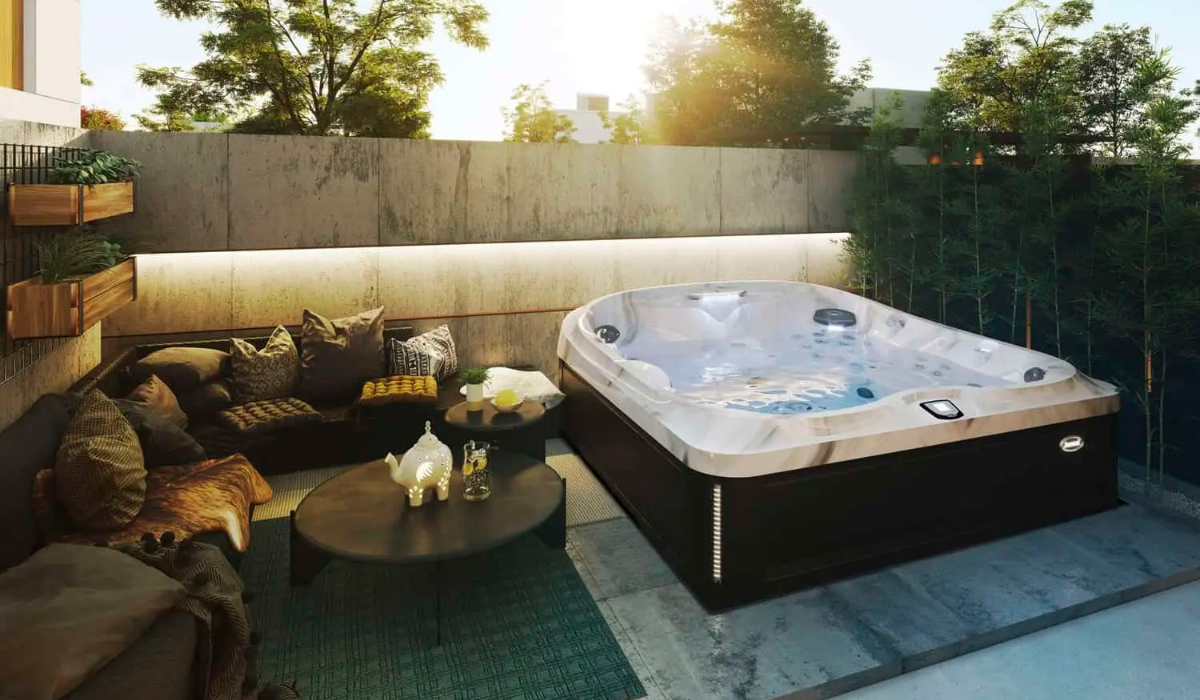
Our fall is a genuine season here, not a two-week handoff between summer and winter. Nights drop into the fifties by late September, the humidity finally breaks, and the mosquitoes give up. That combination is close to ideal for outdoor soaking, and it lasts for months.
Anyone who has owned a spa will tell you the same thing: the water feels best when the air disagrees with it.
Cool Air, Hot Water, and the Contrast That Makes a Soak Work
At 102°F, water feels pleasant in July and remarkable in October. The difference is the contrast. When the air on your shoulders is fifty degrees and the water holding the rest of you is a hundred, your body registers the heat far more sharply, and muscles let go faster than they do on a humid August evening.
Steam does the rest of the work. It rises off the surface, catches the light, and turns an ordinary backyard into somewhere you want to sit for twenty minutes instead of five. It’s the reason so many owners say their hot tub barely gets touched in midsummer and gets used four nights a week once the leaves turn.
Fall is also when the backyard stops competing for attention. The pool is closed or closing, the grill sees less action, and the patio is otherwise sitting empty. A spa gives that space a reason to stay in use through the part of the year when most Maryland backyards go quiet.
The Long Stretch From Labor Day to Thanksgiving
Buy in early September and you’re soaking by the end of the month, with October and November still ahead. That’s roughly ten weeks of the most comfortable outdoor water you’ll get all year, before winter proper even starts.
Those weeks matter more than they sound. They are when the routine forms: who uses it, when, how long, which seat is whose. Owners who get their tub in autumn tend to have the habit locked in well before the first hard freeze, which is exactly when they want it most.
Wait until March and you get the opposite. The tub arrives just as everyone is heading back outside for other reasons, the routine never quite sets, and the spa spends its first six months as scenery.
Installation Goes Smoother Before the Ground Freezes
A hot tub isn’t a purchase you carry home. It’s a delivery, a site, a foundation, and an electrical connection, and every one of those is easier to sort out in September than in January.
The practical side deserves a closer look, because it’s where most of the timing advantage actually sits.
Pads, Patios, and Site Prep
Your spa needs a level, load-bearing surface. Depending on your yard, that might be an existing patio, a reinforced deck section, a poured pad, or a prefabricated base. Pouring or grading is straightforward in September soil. It’s slow and sometimes impossible once the ground is frozen or saturated.
Fall also gives you dry, mild weekends for the small jobs around the install: clearing a path, trimming back shrubs, sorting out a gate, adding a step or a rail. None of it’s hard, but all of it’s more pleasant in sixty-degree weather than in sleet.
Access is the other piece. Most tubs come in on a dolly through a side yard or gate, and the delivery team needs a clear route. Walking that path while you can still see the ground is far easier than guessing at it under six inches of snow.
Electrical Work and Access Planning
Most full-size spas run on a dedicated 240V circuit installed by a licensed electrician, with a GFCI disconnect placed within sight of the tub. Some smaller models plug into a standard 110V outlet, which is worth asking about if running a new line would be complicated at your property.
Scheduling that electrician is simpler in autumn. Ask anyone in the trades around Baltimore County what their December looks like, and you’ll understand why booking the work in October is the better play. Permits, where your township requires them, also move at a calmer pace outside of peak season.
Our team handles this sequence constantly and will walk your site with you before anything is ordered. The goal is that delivery day is a delivery, not a problem-solving session. Reach out to our team and we’ll tell you exactly what your yard needs.
New Models Reach the Showroom Floor in Fall
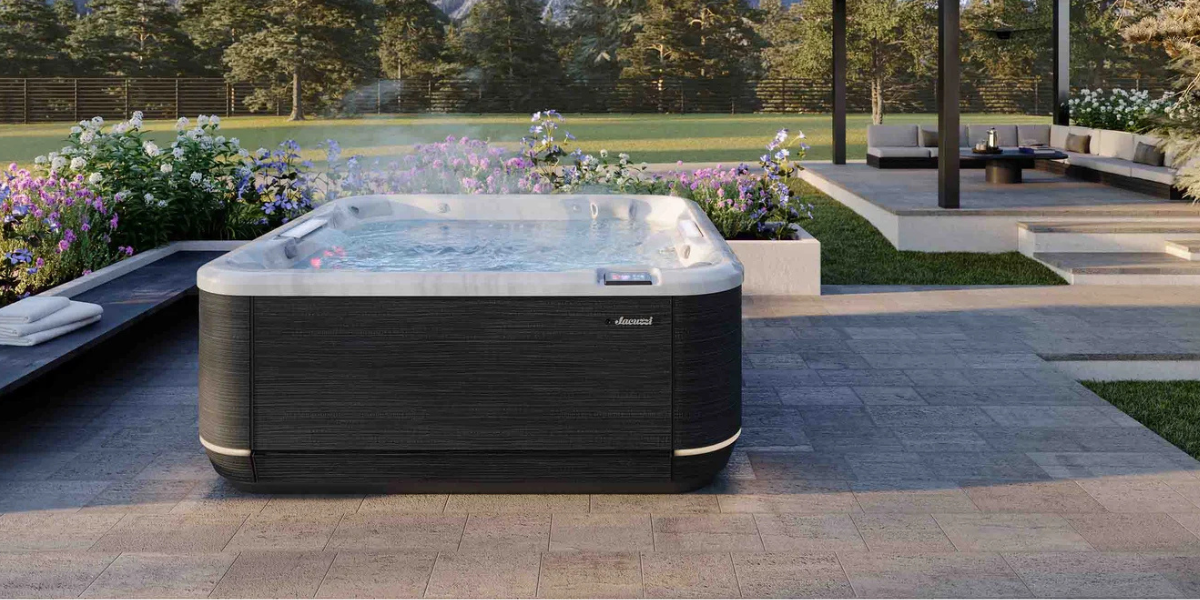
Manufacturers time their model year releases for autumn, which means the fall floor is where you see the newest shells, cabinet finishes, jet layouts, and control systems. Shopping now means choosing from current lineups rather than whatever is left after a busy spring.
That’s true across both of our brands. The Jacuzzi® Hot Tubs lineup continues to lead on engineering, from PowerPro® therapy seating to SmartTub® app control that lets you bring the water up to temperature from your phone on the drive home. Nordic Hot Tubs™ take the opposite approach with real intent: simple, durable, hand-built spas with the Dual Therapy System combining direct-pressure jets and whirlpool flow. The Robb Report has named Nordic one of the five best spas in the world.
Selection is the quiet advantage. Popular sizes and color combinations move steadily through the autumn, and the tub you fall for on the floor in September is far more likely to still be available than the one you go looking for in April. If you’re weighing seating layouts, our 6-person hot tub guide is a good starting point.
Manufacturers also tend to run their strongest seasonal programs in the second half of the year, including financing offers worth asking about while you’re in the showroom.
Your Backyard Is Already in Shape in September
Fall shopping has a hidden practical benefit: your yard is still fully visible. The grass is green, the beds are planted, the furniture is out, and you can stand in the space and see precisely where a spa would sit.
That makes placement decisions much better ones. You can judge sightlines from the kitchen window, check how far it’s from the back door in bare feet, work out where the cover will rest when it’s open, and notice that the downspout you forgot about drains right across the spot you had in mind.
If you have a pool, the crossover is convenient. Pool closing season and hot tub installation season overlap, so the same visit can cover winterizing one and planning the other. Plenty of our customers in Reisterstown and Kingsville handle both in a single autumn.
There’s also a landscaping window here. Screening shrubs, privacy panels, path lighting, and a small deck extension all go in more easily in October than in March, and everything is settled and finished before you’re using the tub every night.
The Wellness Season Starts When the Days Get Shorter
Hot tub use in Maryland is counter-seasonal. Demand for a soak climbs exactly as the weather turns, because that’s when bodies start complaining and evenings start feeling long.
The reasons are worth being specific about.
Stiff Joints and Cold Mornings
Cold, damp weather is hard on joints. Warm water addresses it directly through three properties working together: buoyancy lifts as much as ninety percent of your body weight off compressed joints, heat opens blood vessels so more oxygen reaches sore tissue, and the jets deliver targeted massage where you’re holding tension.
That matters for the ordinary autumn workload around here. Raking, hauling firewood, closing the pool, and the first snow clearing of the year all land on the same lower back. Fifteen minutes at 102°F afterward is the difference between a stiff Sunday and a fine one.
Our hydrotherapy page covers the mechanics in more depth, and our guide to hot tub hydrotherapy for chronic pain gets into soak routines that physical therapists actually recommend.
The Evening Soak and Better Sleep
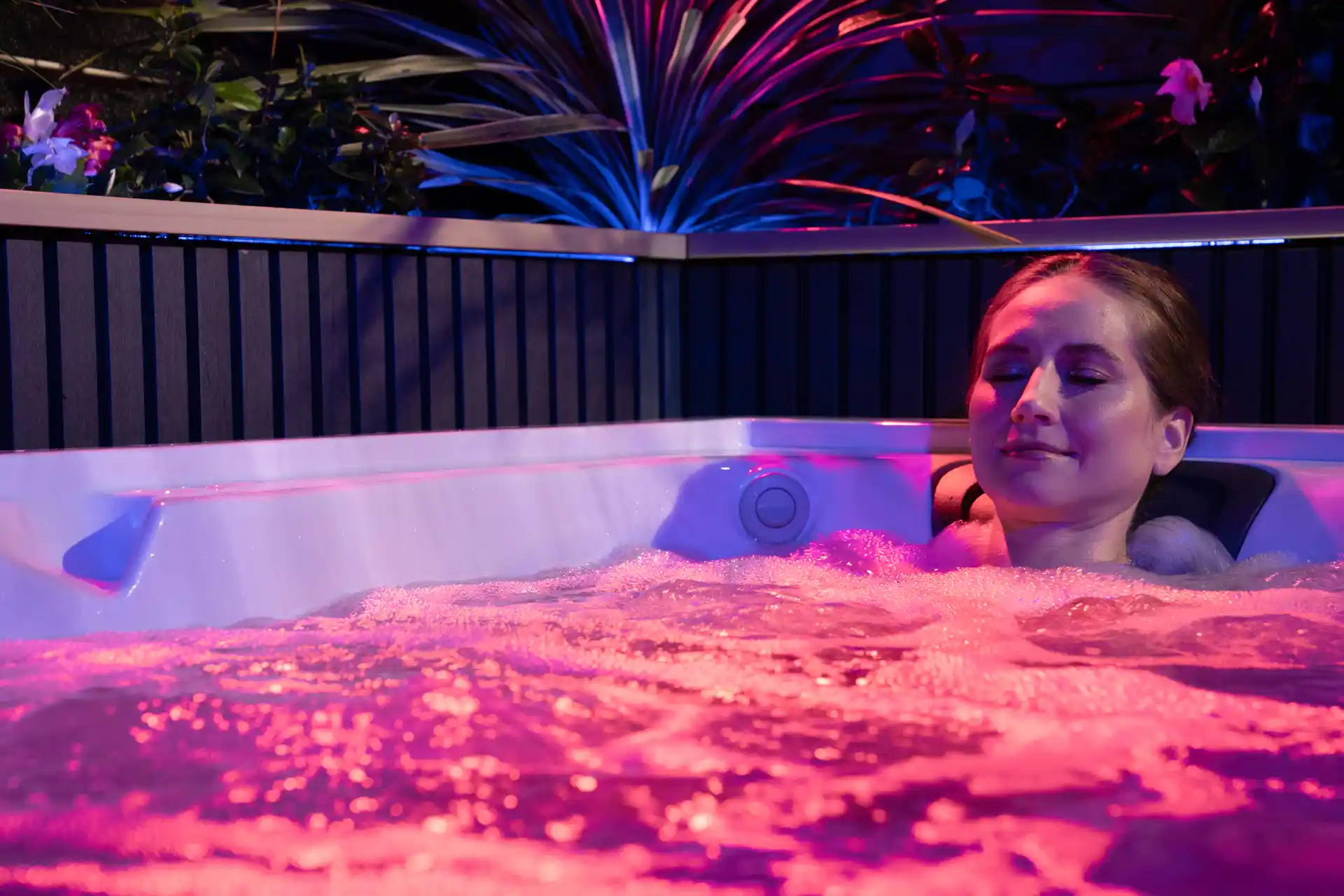
Shorter days affect sleep and mood for a lot of people. A warm soak thirty to sixty minutes before bed helps by a straightforward physiological route: your core temperature rises in the water, then drops once you get out, and that drop is one of the signals the brain uses to release melatonin.
It also functions as a hard stop to the day. No screens, no notifications, twenty minutes outside under a dark sky in November. Owners describe that as the part they didn’t anticipate and wouldn’t now give up.
There’s more on the wider health benefits of regular soaking, from circulation to stress and reflexology, on our site.
Quieter Showrooms Mean Better Conversations
Spring is the busy season in this business. Autumn is calmer, and a calmer showroom is genuinely better for a buyer.
You get unhurried time with someone who knows the product. That means sitting in five or six different shells dry to compare depth and seat shape, asking about jet placement for a specific shoulder or knee, and getting honest guidance on which model suits two people versus a family of six. Those conversations are how people end up with the right tub instead of the one they happened to see first.
Fall is also the easiest time to arrange a wet test, which is the single most useful thing you can do before buying. Water pressure, seat ergonomics, and how a lounger fits your frame are things you can’t assess from a brochure.
Come see us at Kingsville on Belair Road, Reisterstown on Main Street, or our Shrewsbury showroom just over the Pennsylvania line. We have been doing this since 1954, and autumn is when we have the most time to give you.
A Fall Purchase Buys You the Entire Cold Season
Think of hot tub ownership in soaking months rather than calendar years. A September purchase delivers October through March at minimum, which is the entire stretch when a spa earns its keep.
A March purchase inverts that. The tub arrives as the weather warms, sits mostly unused through the summer, and doesn’t really come into its own until the following October. Same tub, same yard, roughly seven months of use lost to timing alone.
Winter is when ownership peaks, not pauses. Snow falling on the cover while you’re in the water is the image every owner eventually sends to their group chat. Christmas week, a January cold snap, the stretch of February when nobody has anywhere to be: that’s when the tub stops being a purchase and becomes part of the house.
Buying in autumn means the first winter is the good one, rather than the one you spent waiting.
Choosing a Hot Tub That Handles a Maryland Winter
Not every spa is equally suited to cold-weather use, so this is the right thing to ask about while you’re shopping.
Insulation is the first consideration. Full-foam construction, insulated cabinets, and a well-sealed base all help the shell hold heat when the air temperature is below freezing, which keeps the heater cycling less often through the coldest weeks.
The cover is the other half of the equation. A thick, tightly fitted, properly sealed cover does more to hold heat than almost any other component, and it’s worth choosing carefully rather than treating as an accessory. Ask about cover lifters too, because a cover you can open one-handed in January is a cover you’ll actually use.
Beyond that, look at water care and controls. Ozone systems like Nordic Clean™ cut down on manual water care work, and app-based controls let you have the water at temperature before you walk outside. Our Nordic features page breaks down cabinet options, jet configurations, and therapy systems in detail.
Your Fall Buying Timeline, Week by Week
Knowing why fall works is one thing. Here’s how the weeks actually lay out so you’re soaking before the clocks change.
Weeks 1 and 2: Decide and visit. Work out who is using the tub and how often, then come into a showroom and sit in several models. Bring rough backyard measurements and a photo or two of the space.
Week 3: Site and electrical. Confirm the pad or patio, book the electrician, and check whether your township requires a permit. This is also when you finalize the delivery route.
Weeks 4 to 6: Delivery, hookup, and fill. The tub is placed, the electrical is connected and inspected, and the spa is filled and brought up to temperature. Water balancing takes a day or two, and we’ll walk you through the first round personally.
Start in early September and you’re in the water by the first week of October, with the whole cold season ahead of you. Start in November and it’s still very much doable; you’ll just want to move on the site prep quickly.
Frequently Asked Questions
Is fall really the best time to buy a hot tub?
For Maryland homeowners, yes. Fall combines comfortable install conditions, easier contractor scheduling, fresh model year inventory, and unhurried showroom time, and it delivers the tub right before the months you’ll use it most.
Can a hot tub be delivered and installed in cold weather?
It can. Winter delivery happens regularly and works fine. Autumn is simply easier, because site prep, concrete work, and trades scheduling are all more straightforward before the ground freezes and before the holidays.
How long does it take from purchase to first soak?
Typically four to six weeks, depending on model availability, what your site needs, and electrician scheduling. If the pad and electrical are already in place, it can be considerably faster.
Do I need a concrete pad?
You need a level, load-bearing surface rated for the filled weight of the spa plus occupants. A poured pad is common, but an existing patio, a properly reinforced deck, or a prefabricated base can all work. We’ll assess your site before you order.
Does a hot tub use more energy in winter?
Heat loss is naturally higher when it’s colder outside, which is exactly why insulation and cover quality matter. Well-insulated modern spas with tight-fitting covers are built for cold climates, and running costs stay steadier through winter than most people expect.
Can I use a hot tub when it’s snowing?
Yes, and most owners say it’s the best soak of the year. Keep a clear, non-slip path to the tub, have a robe and slippers ready by the door, and keep the cover on between uses.
What size hot tub should I choose?
Match it to real use rather than best-case use. Two-to-four-person models suit couples and small households and fit tighter yards, while six-person models leave room for family and guests without feeling crowded. Sitting in each one dry in the showroom settles it quickly.
Come See What a Fall Soak Feels Like
The homeowners happiest with their spa are almost always the ones who bought it a few weeks before they needed it rather than a few months after they started wishing for it. Autumn is that window, and it’s open right now.
Stop by our showrooms in Kingsville, Reisterstown, or Shrewsbury and sit in a few models. Tell us about your yard, your back, and your evenings, and we’ll help you sort out which Jacuzzi® or Nordic Hot Tub™ fits. Browse the full hot tub range before you come in, then let’s get your site sorted while the ground is still soft.
Disclaimer: Prices are only an indication and are subject to change, please contact us for a full quote specific to your location and hot tub installation requirements and specifications.